
23
2025
-
05
Precautions for using glue rollers, how much do you know?
Author:
Rubber rollers are widely used in printing, textile, papermaking, plastics, and metal processing industries, and their performance directly affects equipment operation and product quality. Depending on the application, material, and process, rubber rollers can be divided into various types. Common rubber rollers include polyurethane rollers, silicone rollers, and nitrile rollers. According to the corresponding roller specifications reasonable use, not only prolongs its service life and reduces production costs, but also significantly improves production efficiency.
1. Roller Installation
Before installing the roller, a comprehensive inspection of the roller should be carried out to observe whether there are any cracks, scratches, missing rubber, or bulges on the roller surface, whether the bearings rotate smoothly without any noise, and whether the hardness of the rubber layer meets the standard using a durometer. After the inspection is completed, the roller needs to be installed correctly.
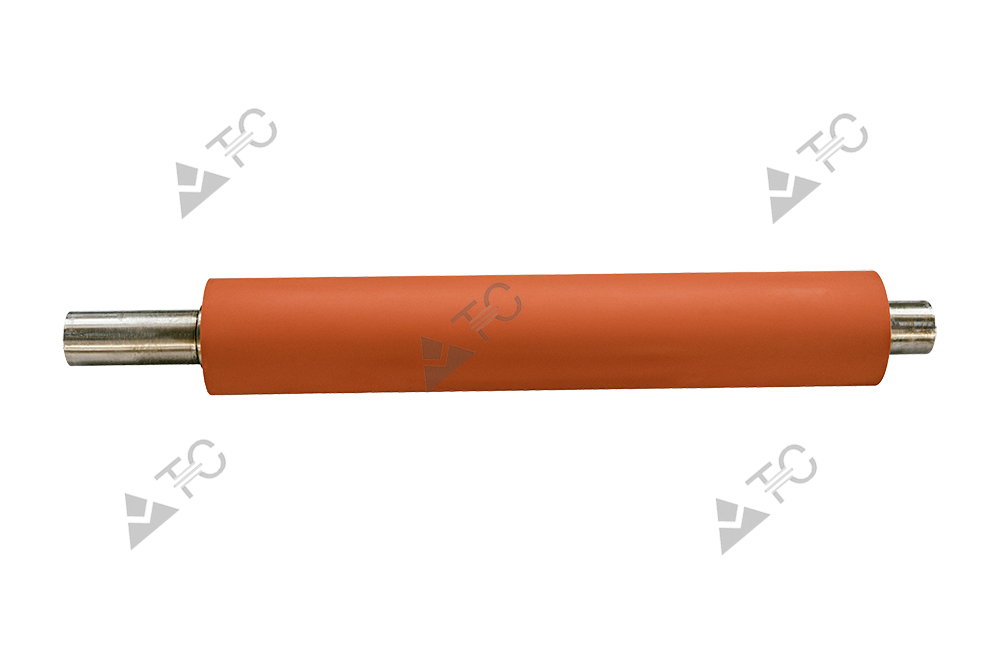
The figure shows a solid silicone roller produced by Wocheng New Materials Co., Ltd.:
2. Daily Cleaning of the Roller Surface
After use, some dirt may accumulate on the roller surface, such as ink in the printing industry and slurry in the textile industry. If not cleaned in time, it will gradually dry and harden, affecting the flatness of the roller surface and reducing the contact effect with the material, thus affecting product quality.
Different materials of rollers have different tolerances to chemical solvents. Incorrect selection may damage the rollers. When cleaning, appropriate chemical solvents should be selected. For example, strong oxidizing solvents will damage chloroprene rubber rollers. When using chemical solvents, the principle of small amounts and multiple times should be followed, and the roller surface should be wiped evenly to prevent damage to the roller surface.
3. Roller Storage
When storing rollers, a dry and ventilated environment should be chosen. A humid environment will accelerate the aging of the rubber surface of the rollers. At the same time, avoid placing the rollers in sunlight. The ultraviolet rays and high temperature in sunlight will cause the rubber molecular chains to break, resulting in the rollers becoming hard and brittle, shortening their service life.
When placing, they should be placed horizontally to avoid deformation due to long-term vertical placement. If there are multiple rollers, they should be stored separately to avoid mutual compression.
During the use of rollers, enterprises should strictly follow the operating specifications for installation, use, and maintenance, and select the appropriate roller type according to the specific application scenario to achieve optimal performance.
Xi'an Wocheng New Materials Technology Co., Ltd. is a newly established independent company of Wocheng Group. The main business includes general equipment manufacturing, metal roller manufacturing, and rubber roller manufacturing. The company will rely on the layout of the aerospace industry supporting facilities in Yanliang District, Xi'an City, and make full use of the talent advantages of various higher vocational colleges in Yanliang District to promote the research and development and manufacturing of high-end roller products.
The company's main products are stainless steel conductive rollers, Hastelloy rollers, silver-plated rollers, positive pressure rollers for processing machines, water and acid squeezing rollers, hard rubber submerged rollers, Teflon rollers, dust removal rollers, electroplating rollers, aluminum guide rollers, knife slot rollers, carbon fiber roller coating, FRP coated rollers, liquid silicone rollers, fluororubber rollers, EVA rollers, glass coated rollers, and various production equipment process roller components.
Solid silicone roller
Previous article
Next article
Previous article
Next article
Latest developments
2026-07-28
Polyurethane Rubber Roller Enhances Industrial Performance with Superior Durability and Precision
Best Polyurethane rubber roller customize solutions offer durable wear resistance, precise performance, and reliable industrial applications with OEM services
2026-06-17
Sticky Roller Revolutionizes Modern Home Cleaning and Fabric Care Efficiency
Best sticky roller customize lint remover for clothes and furniture, strong adhesive sheets, easy tear design, reusable handle, perfect for daily cleaning use
2026-06-02
Coating Roller Technology Advances Drive Efficiency and Quality in Industrial Manufacturing
Best Coating roller customized offers precise coating performance, durable materials, and reliable industrial application results
2026-05-27
EVA Roller Improves Production Efficiency and Material Processing Performance in Modern Industrial Manufacturing
Best EVA roller customize offers smooth surface performance, wear resistance, and stable operation for industrial production
2026-04-16
Threaded Roller for PCB Laminating Process: Enhancing Precision and Stability in PCB Manufacturing
The threaded roller for PCB laminating process plays a crucial role in modern printed circuit board (PCB) production. As electronic devices become smaller and more complex, the demand for high-precision lamination equipment continues to increase. This specialized roller is designed to improve pressure distribution, material alignment, and overall lamination quality.

Xi'an Telephone:+86029-86875088
Xi'an Phone:+8618192872305
Jiangsu Telephone:+860519-68260766
Jiangsu Phone:+8618126380706
E-mail:xianvcity@gmail.com
Xi 'an Address:C6, No. 4, Fuyan Kantian Industrial Park, Yingbin North Road, yanliang district, Xi 'an City, Shaanxi Province
Jiangsu Address: No.1 Feiyue Road, Industrial Concentration Zone, Shanghuang Town, liyang city

Website QR code


CopyRight©2024-Xi'an V-CITY New Material Technology Co., Ltd. All Rights Reserved
Xi'an Phone:+8618192872305
Jiangsu Phone:+8618126380706
E-mail:xianvcity@gmail.com
WhatsApp:18192872305
微信扫码我们